
Post-Viral Recovery
Functional Medicine Gold Coast
wave functional health
Dr Matt le Roux
The virus cleared weeks or months ago. Your body has not.
If you are still exhausted, foggy, and struggling to function, there are specific biological reasons why, and they can be investigated.
Still Not Right
When Recovery Takes Far Longer Than It Should
You were told the infection was over and you should be feeling better by now. But the fatigue is still there, the mental clarity you used to have has not returned, and activities that were once effortless now leave you wiped out for days.
Post-viral syndromes are real, measurable, and distinct from simply taking longer to recover. They involve specific biological patterns including immune dysregulation, mitochondrial dysfunction, and autonomic nervous system disruption that standard recovery advice does not address.
The most telling clinical feature is post-exertional malaise — symptoms that worsen 12 to 48 hours after physical or mental effort rather than improving with gradual activity. This is not deconditioning. It is a signal that cellular energy production is impaired and the nervous system has not returned to baseline.
At Wave we take this presentation seriously. We investigate the biology behind it and build a recovery plan grounded in what the testing actually shows — not in the assumption that rest and time will be enough.
You cleared the infection.
Your body has not caught up.
An important note. Post-viral syndrome is not deconditioning. It is not in your head. And it is not something you simply need to push through.
It is a physiological state with identifiable drivers. At Wave we investigate what is actually happening, and we build a plan around what the testing shows.
Functional medicine does not replace your GP or specialist. We work alongside your existing medical care.
The Gap in Standard Care
Why Conventional Medicine Struggles With Post-Viral Recovery
Standard medical care is designed around acute illness. Once the infection resolves and basic blood markers return to within normal range, the clinical picture is considered resolved. Post-viral symptoms that persist are often attributed to deconditioning, anxiety, or depression, and patients are advised to gradually increase activity and give it time. For many this advice makes things worse, not better, because the underlying biology driving the symptoms has not been addressed.
Post-viral syndromes involve immune dysregulation, mitochondrial dysfunction, autonomic nervous system disruption, microbiome damage, and in many cases ongoing low-grade inflammation or viral persistence in tissues. None of these are captured by a standard full blood count or a CRP level. Without the right testing, the mechanisms driving the ongoing symptoms stay invisible to the clinical picture, and the patient is left without a coherent explanation or a targeted treatment plan.
What We Look For
The Biological Mechanisms Behind Post-Viral Syndrome
Post-viral syndromes share several overlapping biological patterns. The immune system, activated acutely during infection, can become dysregulated in its resolution phase. Natural killer cell activity may be suppressed, cytokine signalling may remain elevated in certain pathways, and regulatory T-cell function may be insufficient to bring the immune response fully back to baseline. This produces a state of low-grade chronic inflammation that depletes energy, disrupts sleep, and impairs neurological function.
Mitochondrial dysfunction is a central mechanism in post-viral fatigue. Viral infections, particularly those involving significant immune activation or oxidative stress, can disrupt the electron transport chain and impair ATP production. The result is an energy production deficit at the cellular level that presents as profound, disproportionate exhaustion, often with the characteristic feature of worsening after exertion rather than improving with rest. This is post-exertional malaise, and it is one of the clearest clinical indicators that something beyond deconditioning is occurring.
The gut microbiome is frequently disrupted during and after viral illness, particularly following treatment with antibiotics, which are often co-prescribed during acute illness. Autonomic nervous system dysregulation involving the vagus nerve affects heart rate variability, gut motility, and the brain-body signalling that governs energy regulation. We assess all of these areas because recovery from post-viral syndrome requires addressing the full biological landscape, not managing symptoms individually.
Our Approach
How Wave Functional Health Supports Post-Viral Recovery
We begin by mapping the current biological state using functional testing that assesses mitochondrial markers through organic acids, immune function through lymphocyte subset panels and inflammatory cytokines where indicated, autonomic nervous system function through HRV analysis using our clinical HRV monitoring platform, and gut microbiome health through Nutripath MicrobiomiX or GI MAP.
Blood chemistry through OptimalDX identifies nutrient depletions including CoQ10, B vitamins, magnesium, zinc, and vitamin D that are critical to both mitochondrial function and immune regulation.
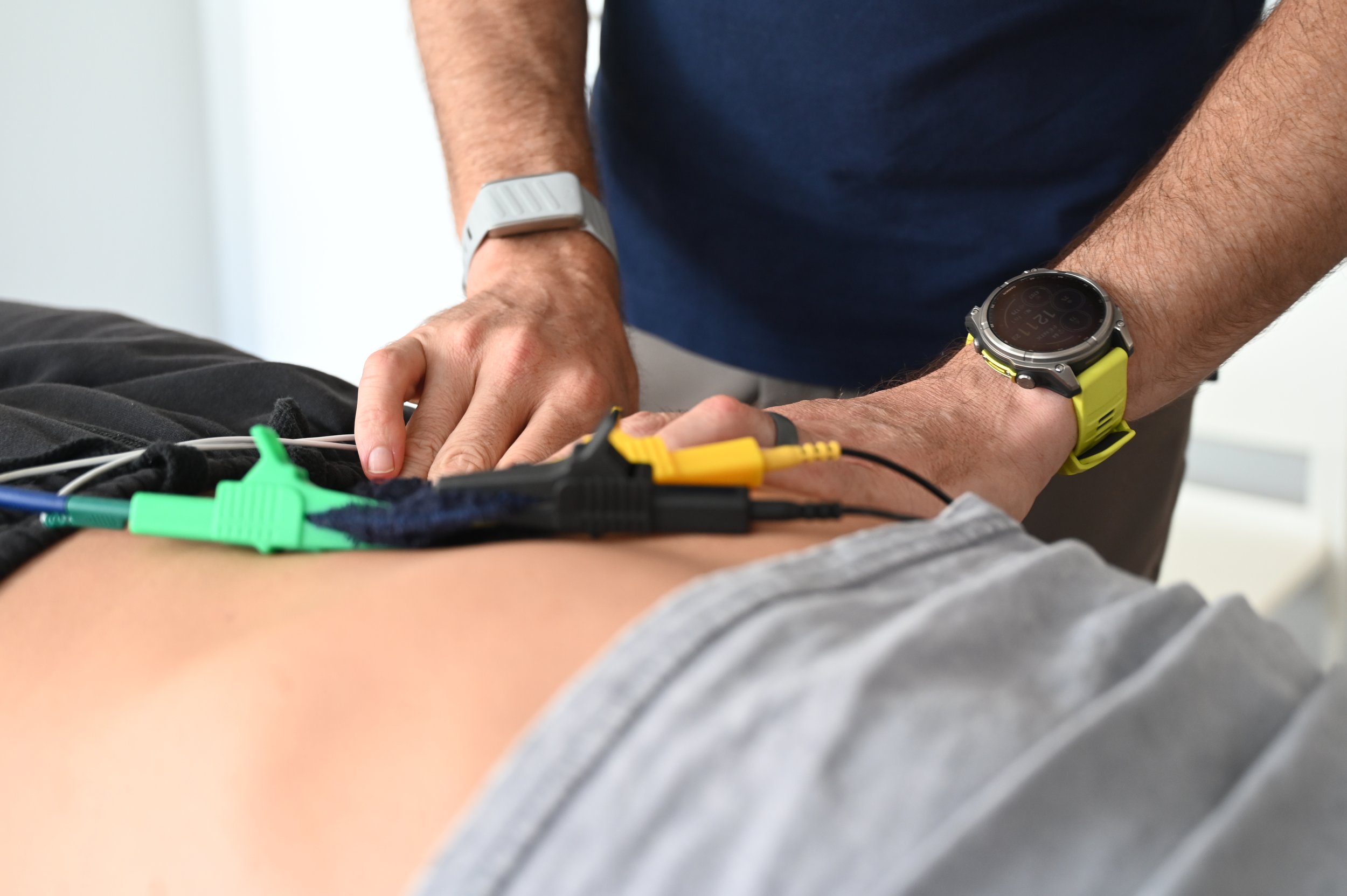
Treatment is paced carefully and deliberately. We do not push for aggressive exercise or rehabilitation until the energy production capacity at the cellular level supports it. Frequency Specific Microcurrent is used to support mitochondrial function, reduce neuroinflammation, and regulate autonomic tone.
Targeted supplementation, dietary support, sleep optimisation, and nervous system regulation protocols are structured to the individual's current functional capacity and adjusted as recovery progresses.
Map the current biological state
Organic acids, HRV analysis, gut microbiome, and functional blood chemistry to identify the specific drivers of your post-viral picture.
Identify nutrient depletions
CoQ10, B vitamins, magnesium, zinc, and vitamin D are critical to mitochondrial function and immune regulation and are routinely depleted during and after viral illness.
Pace treatment to functional capacity
We do not push for aggressive exercise or rehabilitation until cellular energy production supports it. Activity pacing is guided by HRV, not willpower.
Support mitochondria with FSM
Frequency Specific Microcurrent supports mitochondrial ATP production, reduces neuroinflammation, and regulates autonomic tone as part of a structured recovery protocol.
Optimise sleep and nervous system
Sleep disruption and autonomic dysfunction are addressed in parallel to the physical recovery protocol because neither resolves without the other.
Adjust the protocol as recovery progresses
Recovery from post-viral syndrome is not linear. We monitor functional capacity, HRV trends, and symptom patterns and adjust the protocol at each review point throughout the process.
Common Presentations
Symptoms Patients Commonly Present With
The breadth of post-viral symptoms is not random. It reflects the central position that specific immune and neuroendocrine pathways occupy in regulating every system of the body. When a viral illness triggers persistent immune dysregulation, the downstream effects include disruption to the hypothalamic-pituitary axis, impaired mitochondrial energy production, autonomic nervous system dysfunction, and ongoing low-grade inflammation that depletes energy, disrupts sleep, and impairs neurological function long after the acute infection has resolved.
The neurological effects of post-viral syndrome are particularly significant and particularly dismissed in conventional settings. Cognitive impairment, word retrieval difficulties, emotional dysregulation, and what patients describe as feeling like they are thinking through wet concrete are consistent features of post-viral syndrome that reflect genuine neuroinflammatory changes rather than anxiety or deconditioning.
The gut is also heavily implicated. Viral illness disrupts the gut microbiome directly, and antibiotic use during acute infection compounds this significantly. A compromised gut microbiome impairs melatonin and neurotransmitter precursor production, drives intestinal permeability, and creates a secondary source of systemic immune activation that perpetuates the overall inflammatory burden even after the virus itself has cleared. Gut assessment and support is a necessary component of any comprehensive post-viral recovery protocol.
Post-viral syndrome involves a distinct symptom cluster that persists beyond the expected recovery window. The breadth of symptoms across multiple body systems often leads to misattribution or no clinical explanation at all.
Advanced Diagnostics
Testing we use to investigate post-viral
← Scroll to see full table
| Test | What it reveals |
|---|---|
| Organic Acids Testing | Mitochondrial function markers including Krebs cycle intermediates and electron transport chain efficiency. Identifies energy production deficits at the cellular level that explain disproportionate post-exertional fatigue. |
| Blood Chemistry | Optimal range analysis of inflammatory markers, nutrient status including CoQ10, B12, folate, vitamin D, zinc, and magnesium, and metabolic function. Standard ranges consistently miss subclinical deficiencies relevant to recovery. |
| HRV Analysis | Heart rate variability measurement as a real-time marker of autonomic nervous system function, vagal tone, and recovery capacity. Guides pacing decisions and monitors nervous system recovery throughout the protocol. |
| Nutripath MicrobiomiX or GI MAP | Gut microbiome assessment identifying dysbiosis, pathogen burden, intestinal permeability, and immune-gut interactions that perpetuate systemic inflammation and impair nutrient absorption during recovery. |
| Full Blood Count with Differentials | Immune cell population analysis including natural killer cell activity and lymphocyte ratios indicating ongoing immune dysregulation that distinguishes post-viral syndrome from simple deconditioning. |
| DUTCH Complete | Cortisol and sex hormone patterns across the full daily cycle. HPA axis dysregulation is common in post-viral presentations and compounds fatigue, sleep disruption, and recovery capacity. |
| Inflammatory cytokine markers | Specific immune signalling markers including IL-6, TNF-alpha, and others where indicated. Identifies the specific inflammatory pathways driving ongoing immune activation after the acute infection has resolved. |
| Viral reactivation markers | EBV, CMV, and other latent viral antibody panels assessing whether prior infections have been reactivated by the immune disruption of the acute viral illness, adding to the overall immune burden. |
Biological Drivers
What drives post-viral syndrome
Who This Is For
This approach may suit you if...
Frequently Asked Questions
What people ask about mould illness at Wave
Normal recovery from a viral illness follows a fairly predictable trajectory of gradual improvement. Post-viral syndrome is characterised by a distinct symptom cluster that persists beyond the expected recovery window, often with a specific pattern of post-exertional worsening.
The symptom profile, including cognitive impairment, disproportionate fatigue, and autonomic dysregulation, reflects ongoing biological dysfunction rather than slow recovery. Functional testing in these patients consistently identifies measurable abnormalities in mitochondrial function, immune regulation, and autonomic tone.
In conventional post-illness recovery, graduated exercise can be appropriate and helpful. In post-viral syndrome with post-exertional malaise, the opposite is often true. Pushing through fatigue when cellular energy production is impaired can worsen mitochondrial dysfunction and prolong recovery.
The pacing of physical activity needs to be guided by objective markers of recovery capacity, including HRV, rather than effort and willpower. At Wave, we assess your functional capacity before making any recommendations about physical rehabilitation.
Post-viral syndromes have been documented following a wide range of viral infections, including Epstein-Barr virus, influenza, Ross River virus, and enteroviruses. Myalgic encephalomyelitis, sometimes called chronic fatigue syndrome, has been recognised as a post-viral condition for decades.
COVID-19 has brought significantly more research attention and public awareness to this phenomenon, but the biological mechanisms are not unique to that virus. If you are experiencing ongoing symptoms following any viral illness, the same investigative approach applies.
Frequency Specific Microcurrent delivers low-level electrical current at frequencies that have shown effects on cellular energy production, tissue repair, and nervous system regulation in clinical research and practice.
In post-viral presentations we use FSM to support mitochondrial ATP production, reduce neuroinflammation, and improve autonomic nervous system tone. It is used as part of a broader protocol rather than a standalone treatment, and the approach is adjusted based on individual response and clinical monitoring.
This varies considerably depending on the severity of the initial illness, the duration of symptoms before intervention begins, the specific biological mechanisms identified, and the individual's baseline health status and nutrient reserves.
Some patients notice meaningful functional improvement within six to twelve weeks of beginning a targeted protocol. Others with more entrenched dysfunction require a longer treatment timeline. What we can offer is a clear picture of what is driving the symptoms and a rational, paced plan for addressing it.
You are not imagining it.
And you do not have to keep waiting.
Post-viral recovery is one of the most isolating clinical experiences there is, because you look well and your tests look normal, but you know something is genuinely wrong. Recovery is possible. It begins with the right investigation.
Book Your Consultation