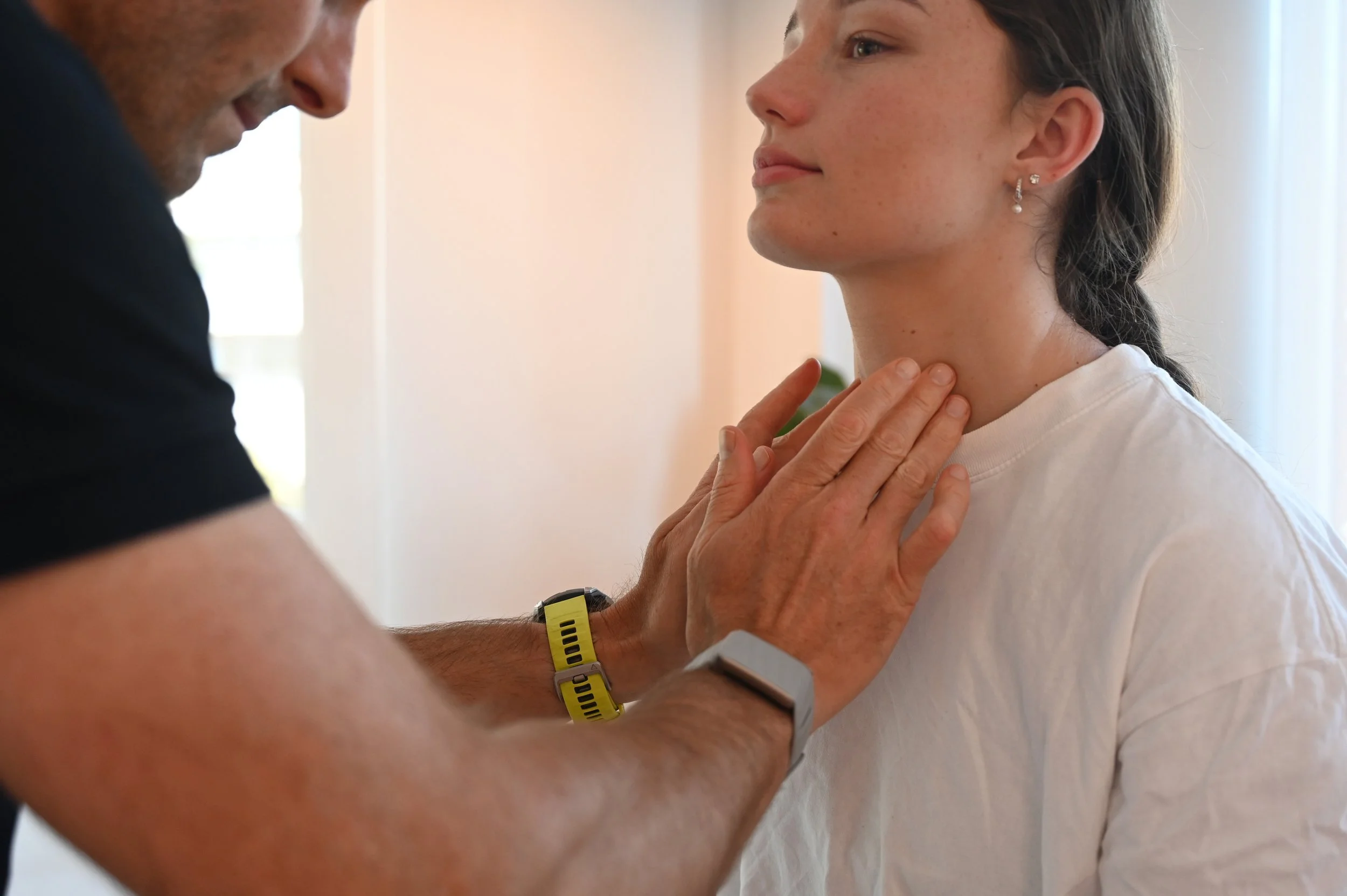
Hashimoto's Thyroiditis and Hypothyroidism
wave functional health
Dr Matt le Roux
Fatigue that sleep does not fix. Hair thinning. Weight that will not shift no matter what changes. Cold hands and feet. Brain fog and low mood. A standard thyroid panel comes back within range and the conversation ends there.
At Wave Functional Health this is one of the most common presentations Dr Matt le Roux sees on the Gold Coast. A normal TSH does not rule out thyroid dysfunction. It rules out a single narrow marker on a single narrow test. Hashimoto's thyroiditis, the autoimmune condition behind the majority of underactive thyroid cases in Australia, can be active for years before standard bloods flag it.
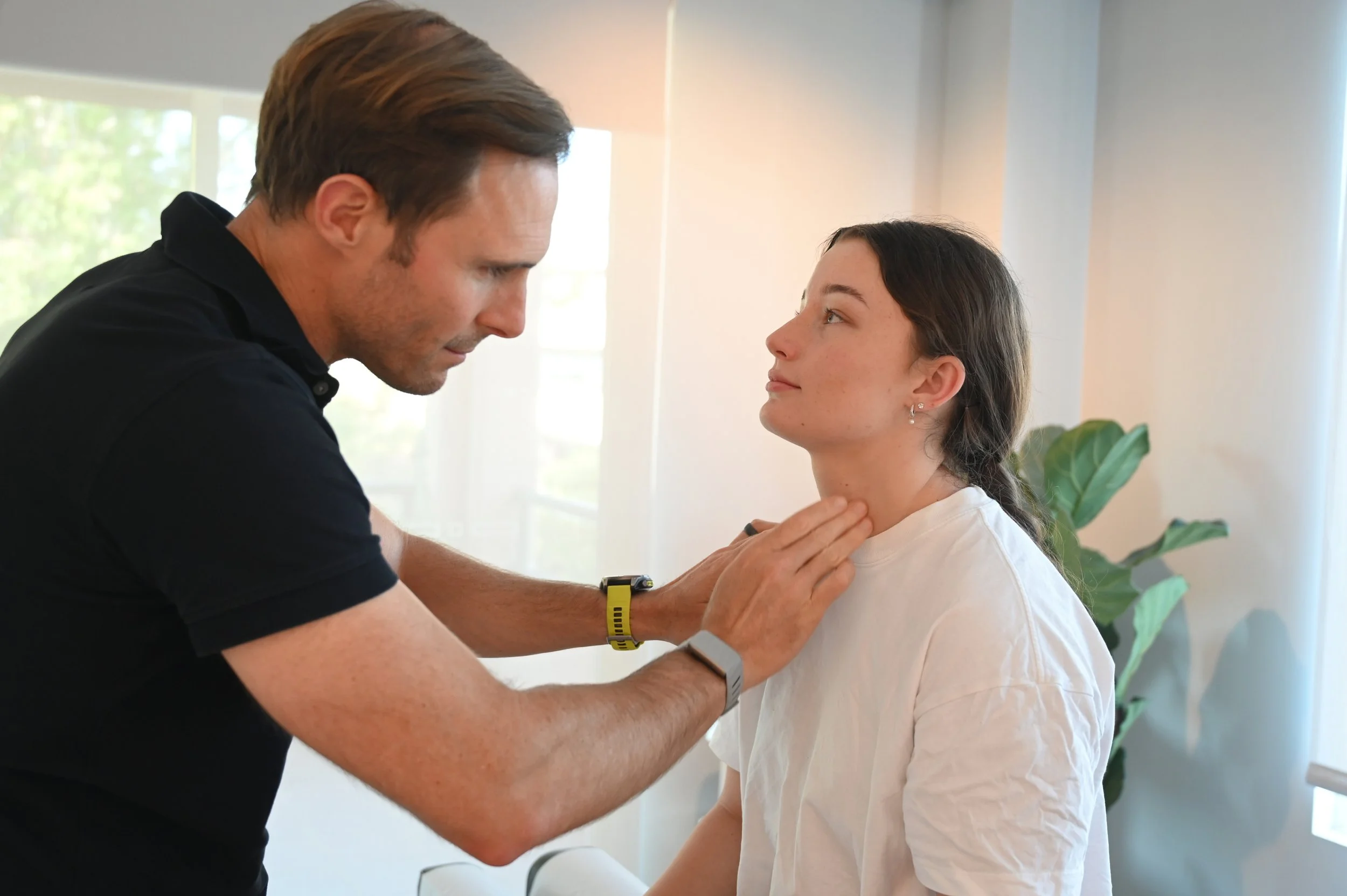
Understanding what is happening
What is Hashimoto's thyroiditis?
Hashimoto's thyroiditis is an autoimmune condition in which the immune system produces antibodies that attack the thyroid gland, gradually reducing its ability to produce thyroid hormone. It is the leading cause of hypothyroidism in developed countries and is significantly more common in women, particularly in the postpartum period and through perimenopause.
Because thyroid tissue destruction happens gradually, symptoms often appear well before TSH moves outside the standard reference range. This is the gap most patients fall into: symptomatic, unwell, and repeatedly told their bloods are fine.
Common Presentations
Does this sound like you?
The gap between a normal TSH and a fully functioning thyroid is wider than most standard panels are designed to detect. Hashimoto's can be driving antibody-mediated tissue destruction for years while TSH remains technically within range, because the pituitary signal does not shift until thyroid reserve is significantly depleted.
By the time TSH moves, many people have already spent years being told their thyroid is fine while living with the full symptom picture of underactive thyroid function. The pattern of symptoms, their timing relative to the cycle, stress, and other health events, is often as diagnostically informative as the numbers themselves.
Normal TSH.
Everything still feels wrong.
Beneath the Surface
How Wave Functional Health approaches Hashimoto's thyroiditis
Thyroid function does not exist in isolation. It sits downstream of gut health, immune regulation, adrenal output, and nutrient status. Rather than treating TSH as the whole story, Dr Matt investigates the upstream systems that drive Hashimoto's.
Detailed history and lab review
Care begins with a thorough clinical history including symptom timeline, cycle patterns, stress history, and review of any existing results. Where prior testing is incomplete, a full thyroid panel and relevant functional markers are ordered before the next appointment.
Targeted functional testing
Based on the clinical picture, functional testing is recommended to investigate the upstream drivers most relevant to your presentation. This may include GI MAP stool analysis, DUTCH hormone testing, nutrient panels, and body composition assessment, sequenced to build the most complete picture efficiently.
Individualised protocol and ongoing monitoring
A personalised protocol is built around what the testing shows, addressing gut function, nutrient status, stress physiology, and lifestyle factors alongside appropriate medical thyroid management. Progress is monitored through retesting and clinical review, with the protocol adjusted as results evolve.
Care is designed to work alongside your GP or endocrinologist, not replace it.
Gut health and intestinal permeability
A significant proportion of the immune system lives in the gut. Increased intestinal permeability, dysbiosis, and conditions such as SIBO are consistently associated with autoimmune thyroid activity. Addressing gut function is often the single most impactful step in reducing antibody levels and is assessed through GI MAP stool analysis at Wave.
HPA axis and adrenal output
Chronic stress and dysregulated cortisol patterns interfere with the conversion of T4 into active T3 and can worsen autoimmune flares. This is a major reason thyroid symptoms often intensify during high-stress periods even when medication doses remain the same. Cortisol patterns are assessed through DUTCH Complete hormone testing.
Nutrient status
Selenium, zinc, iodine, iron, and vitamin D all play direct roles in thyroid hormone production and conversion. Deficiencies in any of these can blunt the effectiveness of thyroid treatment regardless of dose, and are frequently missed on standard panels that do not assess functional nutritional status.
Environmental and infectious triggers
Mould and mycotoxin exposure, viral triggers such as Epstein-Barr reactivation, and chronic low-grade infections are increasingly recognised as contributors to autoimmune thyroid activity in susceptible individuals. Where history suggests these factors, appropriate investigation is incorporated into the assessment.
Common Presentations
Contributing factors we investigate
Advance Testing
What we assess for Hashimoto's thyroiditis
Most GP thyroid panels check TSH alone and occasionally free T4. This misses several critical pieces of the picture that directly explain why someone can be symptomatic with a technically normal result.
What most panels check
Designed to detect overt disease — misses autoimmune activity, conversion problems, and subclinical dysfunction that is already producing symptoms
What reveals the complete picture
Provides a complete picture of thyroid production, conversion, and the upstream drivers maintaining dysfunction
← Scroll to see full table
| Test | What it reveals in a Hashimoto's presentation |
|---|---|
| Full Thyroid Panel | TSH, free T3, free T4, reverse T3, TPO antibodies, and thyroglobulin antibodies — providing a complete picture of thyroid production, active hormone availability, conversion efficiency, and autoimmune activity that a standard TSH-only panel completely misses |
| GI MAP Stool Analysis | Gut microbiome composition, intestinal permeability markers, and inflammatory activity — assessing the gut immune environment that directly influences autoimmune thyroid activity and is one of the most modifiable drivers of antibody levels |
| DUTCH Complete Hormone Testing | Full cortisol curve across the day and night, adrenal reserve, and sex hormone patterns — identifying the HPA axis dysregulation that impairs T4 to T3 conversion and drives autoimmune flares during periods of sustained stress |
| Functional Nutrient Panel | Selenium, zinc, iodine, iron, ferritin, vitamin D, and B12 assessed at functional thresholds — identifying the nutritional insufficiencies that directly impair thyroid hormone production and conversion regardless of medication dose |
| Comprehensive Blood Chemistry | Inflammatory markers, liver function, blood sugar regulation, and lipid panel assessed at functional reference ranges — identifying the metabolic and inflammatory contributors to thyroid dysfunction and monitoring improvement over time |
| InBody 580 Body Composition | Skeletal muscle mass, visceral fat, and body fat percentage — tracking metabolic changes as thyroid and adrenal function improves, providing objective progress data beyond weight alone |
| SIBO Breath Testing | Where gut history suggests small intestinal bacterial overgrowth as a contributing factor to intestinal permeability and the autoimmune environment driving Hashimoto's activity |
Who This Is For
This approach may suit you if…
Frequently Asked Questions
What people ask about Hashimoto's thyroiditis care at Wave
Hashimoto's cannot be cured, but antibody levels and symptom burden can often be significantly reduced by addressing the underlying gut, immune, and lifestyle drivers. Many patients see meaningful improvement in energy, mood, and metabolic symptoms even without antibodies reaching zero.
The goal is not to eliminate the diagnosis but to reduce the autoimmune activity to a level where it no longer significantly impairs thyroid function or daily quality of life — and to address the drivers that are maintaining it.
TSH is only one marker in a much larger system. It reflects what the pituitary is signalling to the thyroid — not what the cells are actually receiving. Free T3, reverse T3, thyroid antibodies, adrenal function, and nutrient status all influence how thyroid hormone is produced, converted, and used at the cellular level.
Symptoms can appear well before TSH moves outside the standard range, particularly when antibody-mediated tissue destruction is ongoing or when T4 to T3 conversion is impaired by stress, inflammation, or nutrient insufficiency.
Yes significantly. A large proportion of immune activity originates in the gut, and conditions such as increased intestinal permeability, dysbiosis, and SIBO are strongly associated with autoimmune thyroid activity. The relationship is bidirectional — gut dysfunction can trigger and maintain autoimmune activity, while thyroid dysfunction can itself impair gut motility.
Improving gut function is often the single most impactful step in reducing TPO antibody levels and is a central component of the functional medicine approach to Hashimoto's at Wave.
No. Functional medicine care at Wave is designed to work alongside your GP or endocrinologist and your existing thyroid medication, not replace it. The goal is to address the drivers of dysfunction while your medical thyroid management continues as prescribed.
Any changes to medication are managed by your prescribing practitioner based on updated lab results over time.
This depends on your history and current results. A full thyroid antibody panel is standard for anyone presenting with thyroid symptoms or a Hashimoto's history. Additional functional testing such as GI MAP stool analysis or DUTCH Complete hormone testing is recommended based on your symptom pattern and what existing results show or leave unanswered.
Dr Matt will discuss which investigations are most relevant to your presentation at your initial consultation before any testing is ordered.
Maybe it Might Be Something Else?
A normal TSH is not
the end of the investigation.
At Wave Functional Health we use a complete thyroid panel, gut health assessment, DUTCH hormone testing, and functional nutrient analysis to investigate what standard testing leaves unanswered — and build a protocol around what your thyroid actually needs.
Book a ConsultationConsultations available in clinic in Robina Gold Coast and worldwide via telehealth.